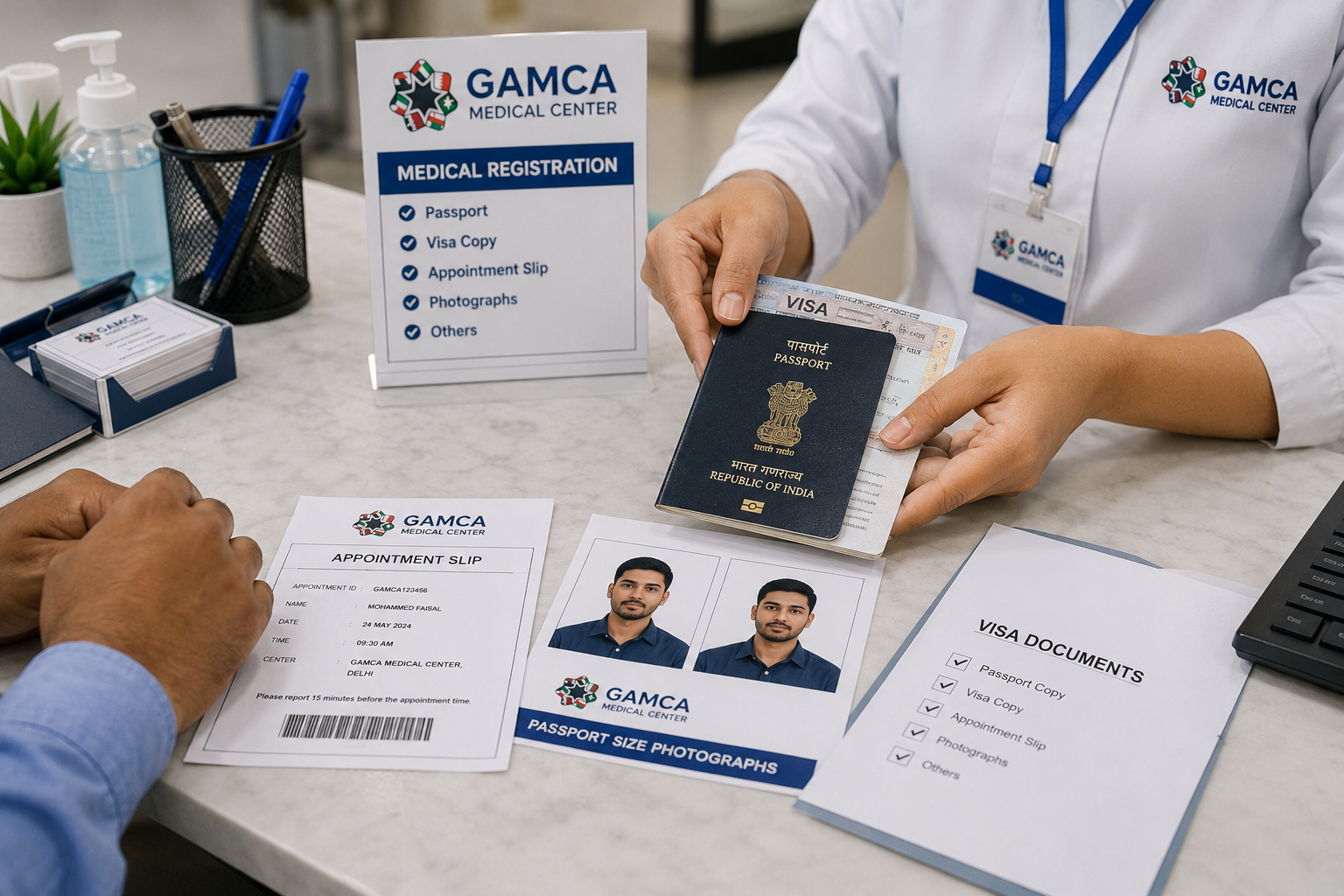
Anyone applying for a work visa across the Gulf region will eventually come across a shared requirement tied to Gcc countries medical screening. It applies broadly across the six member nations of the Gulf Cooperation Council, and while the exact process can vary slightly by destination, the underlying purpose and structure stay fairly consistent. Here is a practical rundown of what to expect.
Which Countries This Applies To
The Gulf Cooperation Council includes Saudi Arabia, the United Arab Emirates, Qatar, Kuwait, Bahrain, and Oman. Each of these countries requires incoming workers on employment visas to complete a medical screening before their visa is finalised, and the testing is generally carried out through a network of approved centres in the applicant’s home country rather than after arrival.
What the Standard Screening Includes
Across most GCC destinations, the screening covers a chest X-ray to check for tuberculosis, blood tests for hepatitis B, hepatitis C, and HIV, a urine test, and a general physical examination. Some countries may have small variations in exactly which additional tests are required, so it is worth confirming the specific checklist for your destination rather than assuming every country’s requirements are identical.
Why the Region Takes a Shared Approach
Given how many foreign workers move into GCC countries each year, having a coordinated network of approved clinics rather than country-by-country systems built from scratch makes the whole process more efficient and easier to verify. It means an applicant’s results can be trusted across borders as long as the testing was carried out at a properly approved centre following the shared standard for Gcc countries medical clearance.
Who Is Required to Complete It
This requirement typically applies to workers moving on employment visas, covering a wide range of job categories from skilled technicians to domestic staff. Short-term visitors and certain other visa categories are usually exempt, but it is always worth confirming your specific situation with your recruitment agency, since assuming exemption incorrectly can cause delays if it turns out you actually needed the screening.
Do Requirements Really Differ Between Countries?
While the overall framework is shared, some GCC countries do have slightly different specific requirements, particularly around additional tests or documentation for certain visa categories. For example, some destinations may require additional screening for specific occupations, such as food handling roles, while others stick to the standard core panel of tests for nearly everyone. This is exactly why it matters to confirm your destination country clearly before booking rather than assuming every Gulf nation follows an identical checklist. A quick conversation with your recruitment agency or a check against updated country-specific guidance can clear up any confusion well before you arrive at the centre, saving you from an incomplete test that needs to be repeated.
How to Confirm Your Specific Requirements
Given the small variations that can exist between countries, the most reliable way to confirm exactly what applies to you is to check directly with your recruitment agency or employer, who should have clear guidance tied to your specific visa category and destination. It also helps to ask explicitly whether any additional tests beyond the standard panel apply to your occupation, since certain roles occasionally carry extra requirements that are easy to miss if you only skim a general checklist. Keeping a simple written record of what you have confirmed, rather than relying purely on memory or a verbal conversation, can also help if any question comes up later in the process. This kind of small diligence rarely takes more than a few minutes but consistently prevents the more time-consuming problem of showing up for testing only to discover a required element was missed.
A Quick Word on Renewals and Repeat Trips
Workers who return home on leave and then go back to the same job typically do not need to repeat the full screening unless a significant amount of time has passed or their visa is being freshly renewed under new terms. Rules here can vary depending on your specific employer and the country’s current policy, so it is worth asking directly rather than assuming your original clearance still applies indefinitely. For those changing employers or destination countries entirely, a fresh screening is almost always required, since the process is tied closely to the specific visa application rather than to you as an individual on a permanent basis.
Planning Ahead for a Smooth Process
Because this step is required before your visa can be finalised, it makes sense to treat it as a priority early in your application timeline rather than something to handle at the last minute. If you want to check current requirements and approved centres related to Gcc countries medical clearance before booking, Gcc countries medical is a solid place to start, giving you a clearer sense of what to expect for your specific destination country.