Introduction
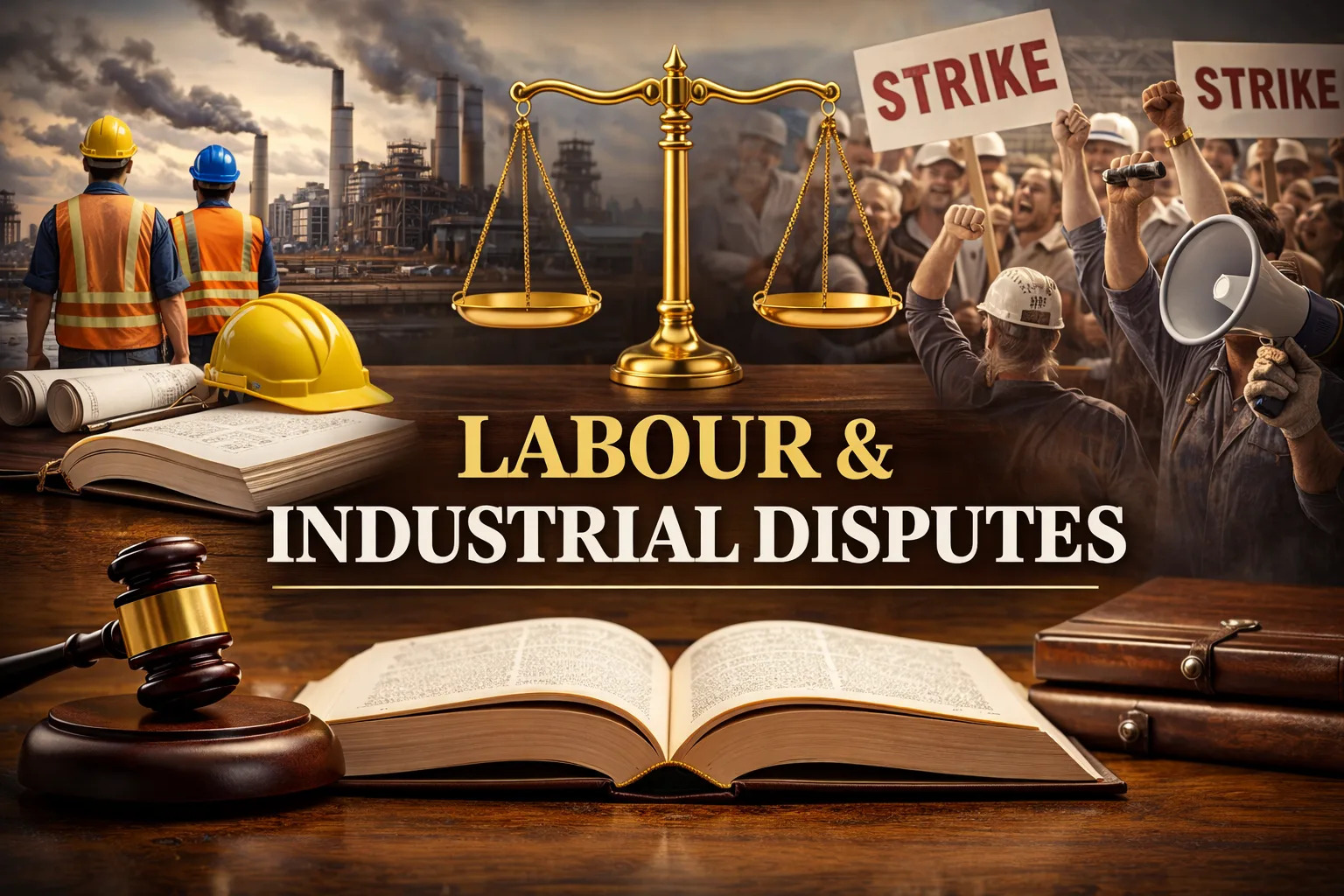
Workplace disagreements can develop for many reasons, including termination, unpaid wages, employment conditions, disciplinary action, or disagreements between workers and management. What starts as a discussion between an employee and employer can sometimes turn into a formal legal dispute. Labour & Industrial Disputes require careful attention because employment records, company policies, contracts, and applicable labour laws may all become relevant. Taking proper legal advice can help both employers and employees understand their position before the disagreement becomes more complicated.
Common Reasons for Workplace Disputes
Employment disputes are not limited to salary disagreements. Issues can also involve wrongful termination, working conditions, disciplinary proceedings, leave, benefits, workplace policies, or disagreements over employment terms. In industrial settings, disputes may involve several employees or differences between workers and management. The circumstances of each matter are different, so the first step is usually to understand what actually caused the dispute. Looking at the complete background can reveal whether the issue can be resolved internally or requires a formal legal approach.
Importance of Employment Records
Documents can play an important role when a workplace dispute develops. Appointment letters, salary records, attendance information, disciplinary notices, emails, internal communications, and company policies may help establish what happened. Employees should preserve relevant records, while employers should also maintain proper employment documentation. A lawyer can review these materials and identify which documents may support the client’s position. Sometimes a simple email or old payroll record can become important evidence, so keeping records properly is worth the effort.
Handling Disputes Before They Escalate
Not every employment disagreement needs to immediately become a lengthy legal proceeding. Depending on the circumstances, discussions, internal grievance procedures, mediation, or negotiated settlement may provide a practical solution. Legal advice can help a party understand what should be discussed and which terms may be reasonable. If an agreement cannot be reached, the person can then consider the appropriate legal remedy. Trying to resolve the issue early can sometimes save both sides considerable time and expense, though it is not suitable for every dispute.
Legal Representation and Proceedings
Some workplace disputes eventually require formal proceedings before the appropriate authority, labour forum, tribunal, or court. At that stage, proper preparation becomes important because documents, statements, evidence, and procedural requirements may all affect the matter. A legal professional can assist with drafting necessary applications or responses and represent the client during hearings. They can also explain the progress of the case and advise on the next step. Labour matters may take time, so keeping expectations realistic is important.
Conclusion
Workplace disputes can affect income, business operations, professional relationships, and future employment, making them important for everyone involved. Labour & Industrial Disputes should be approached with proper documentation and an understanding of the applicable legal process rather than emotional reactions. Timely legal guidance can help identify practical solutions, support negotiations, and prepare a case if formal proceedings become necessary. Each employment dispute has its own facts, so the best approach should be decided after carefully reviewing the circumstances and available records.